
Eras End, Humanity Endures
E250: 2,500 years of stone, 250 years of a nation, 250 weekly editions of a substack. A travel triptych explores "What endures?" Essay.

We stand, once again, on the cusp of a seismic shift in technology—one that will change the way we work and live, politic and pray. With these three stories I reached back in time, searching for lessons of hope and resilience, reinvention and creativity, for ideas on how to survive and transform when eras shift like hot molten lava beneath our feet. And I found them in the standing stone columns of Paestum, a city that showed up on the world map around the 7th century BCE, … 2,500 years ago.
I’m sharing the Ancient Civilizations triptych, a chapter originally intended for my travel memoir, working title “Ripples”:
triptych (n): A triptych is a work of art (like a painting, photograph, or carving) that is divided into three sections or panels. Traditionally, the three panels are hinged together so the two outer “wings” can fold over the larger central panel.
Three panels that hinge together.


Panel I: Earthquakes, Greek Columns and Discovering Paestum (2015)
Panel II: From Cybele to Artemis to Diana - how different civilizations put their stamp on the same small patch of land (2005)
Panel III: Ephesus and Earthquakes - Letters from St. Paul and his-story (2005)
Can you detect the hinge?
Ancient Civilizations Panel I
Today our son teased us with a photo of his burrata, prosciutto and tomato confit sandwich.
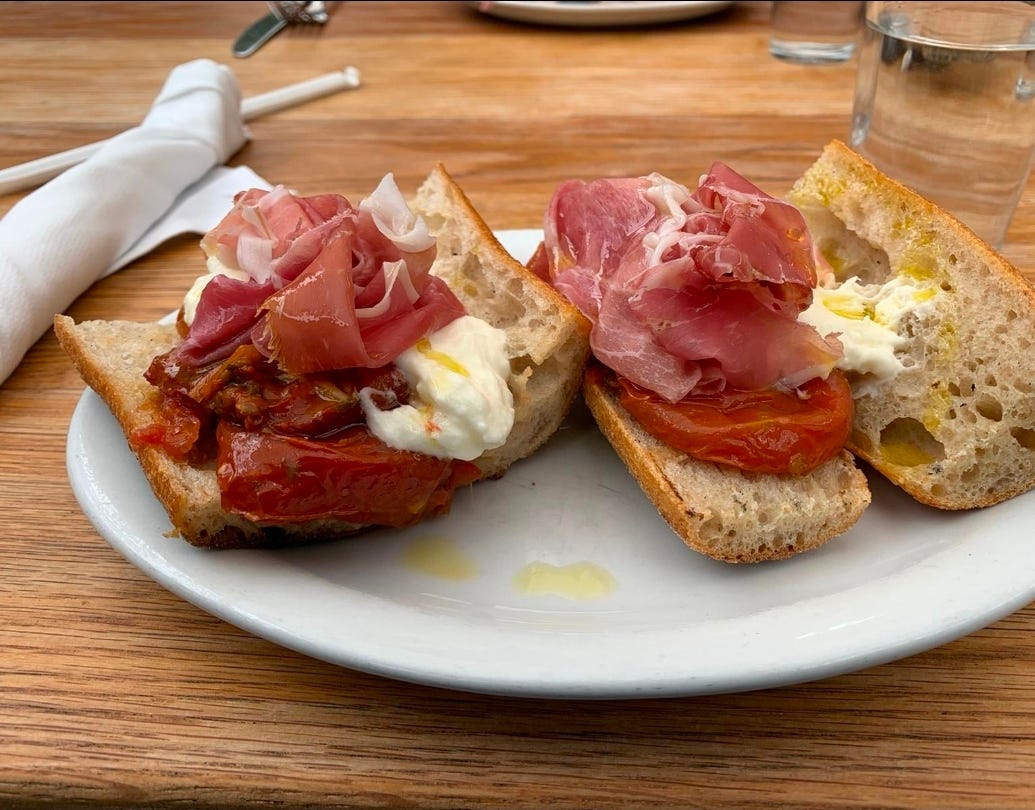
“Ah. But was it as good as ‘Our’ burrata?” his sister asked.
Consider it a ripple effect of our long year of travel, but burrata always has a way of sending me time-travelling, hurtling back 2,500 years through Greek and Roman civilizations.
Earthquakes and Greek columns
Some years ago, we organized a family reunion in Italy. For stage one, we met up on the Amalfi Coast with my sister and her young family, who had flown in from Madrid. Seven days of seriously windy roads, … in a seven-seater driving manual, … five giggling, singing cousins in the back, … up the hills, … down the hills, … hanging off the cliffside, … ready to fall into lemon groves. Shades of our donkey ride up the Himalayas.
We lounged on the beaches, saw the beauty of the coastline from the heights of Ravello, and took the ferry across to Capri.
And every night - no matter what else we had eaten - we would walk down from our Airbnb in Vietri Sul Mare to the town square to indulge in our “dessert”: a pizza loaded with fresh buffalo mozzarella! (After all, what is ice cream other than cool creamy dairy?)
Next, we were headed to stage two of our journey - a long drive to Tuscany, where my parents were flying in from London to meet us and spend some time getting to rediscover their now teen-aged grandchildren. We’d found a wonderful Airbnb - a whole wing of an old farmhouse on a working organic farm in Rignano sull’Arno with more than enough space to house an extended family of 14.
But not before …
Have I ever mentioned how much of a history nut my husband is? Passionate. Obsessed! Cannot resist anything Roman. His idea of a perfect day is to wander aimlessly for hours around an archaeological dig, poking here and there. Over the decades this has rubbed off on his children!


He was in his element in the Italian countryside. We had marched up the side of Vesuvius, spent a day in the intense heat tracing our steps alongside those of the last inhabitants of Pompeii, studying the mosaics and questionable two-century-old graffiti.
As we left the Amalfi coast en route to Tuscany, he insisted we detour 50 miles to our south to visit Paestum. Because the only thing more interesting to him than Roman history is its Greek variation!
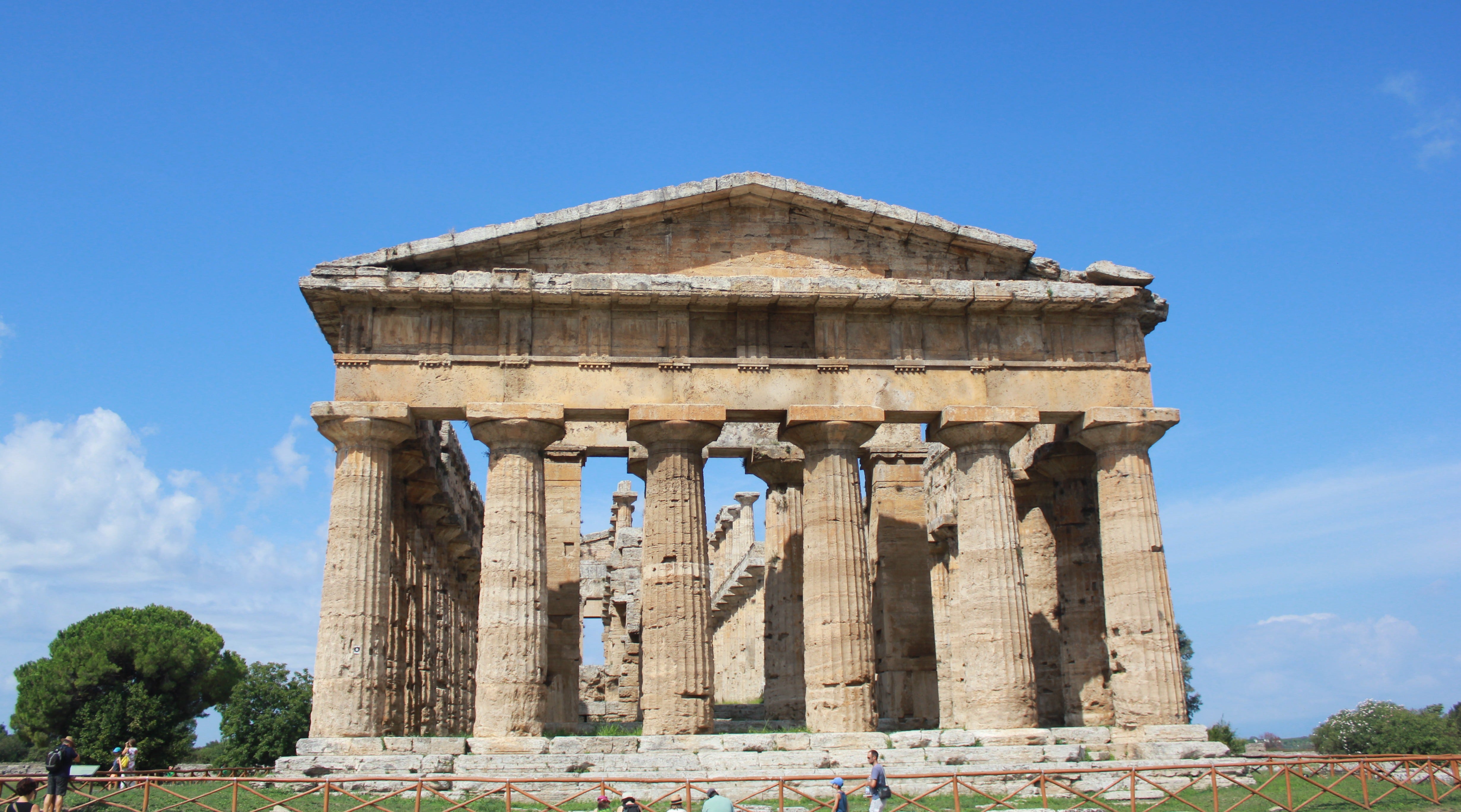
Paestum was a complete surprise. It is tucked away in the Province of Salerno, that little elbow that connects the Amalfi Coast with the Italian peninsula - three Greek temples that stood tall against a piercing blue Amalfi sky, a mere one hour’s drive south of Pompeii.
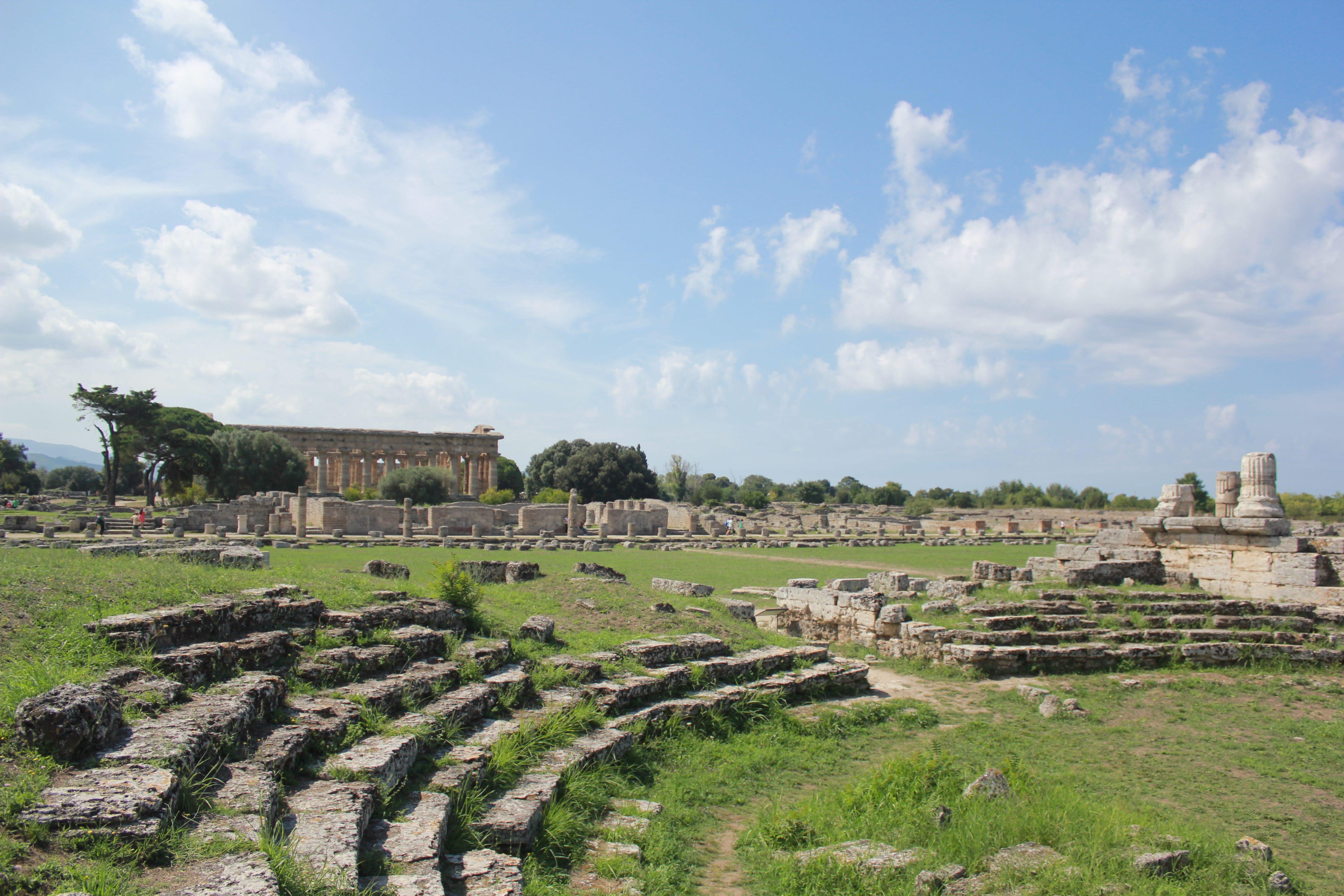
For those (like me) who did not know it, Paestum1 was the seat of government that led the very profitable Greek colony on what we now call Italy - before Rome became Rome and went on to launch its own empire and world expansion. The Greeks named it Poseidonia, after the sea god Poseidon, and it was nestled in the wider region known as Magna Grecia that stretched from Naples across most of southern Italy. The UNESCO World Heritage site is majestic. Huge columns of forgotten temples resurrected to the Gods: Neptune, Hera and Athena.
This site was raised 2,500 years ago. A time before AI, before computers and calculators, before smartphones and CAD design, before PhDs and certifications, when all work as we know it today was not yet a glimmer in someone’s eye, before the “Future of Work”. And yet …
And yet, as I walked under the intense sun that you only find in this corner of Italy, I felt the passed generations, the bustle of life in this 5 km long complete city that was once the seat of Greek civilization in Italy, complete with temples, arenas, and gates.
My mind filled with observations and questions. As our children roamed the site with their walking-encyclopedia-uncle and fact-hungry-Dad, I found myself a grassy seat in what would have been a public arena and started musing:
How had the Ancients created such magnificent architectural marvels?
When you stand alongside a portion of a LEGO piece that makes up one of these columns, the human form is dwarfed.
Did giants really walk the Earth that such magnificence could be created? Or did it take an army of devotees, converts or slaves? How do humans do great things?
I stared up at the white limestone Doric columns, upon these marvels of engineering, these monuments to human ingenuity, and a belief settled into my bones: ‘we’re going to be alright’. We, humans, will transition this latest new civilization on our doorstep, just as we have time and time again.
History never fails to restore my faith in the enduring power of humanity.
This whole experience felt eerily familiar. It echoed back … back ten years, back to Ephesus … where we had first stumbled on a similar trio of stone, scripture and seismic shifts.
Ancient Civilizations Panel II
How could Claire Fraser lean on a set of standing stones and be transported back 200 years through time? Diana Gabaldon’s Outlander series is fiction. But after travelling the world for a year, I’d come to believe that we were actually standing on one such spot on Earth.
Places that call to your soul. Where time, religion, culture and civilization combine and clash against each other in an ancient rhythm, mixing and somersaulting over themselves.
Cybele to Artemis to Diana
We were at our first stop in Selçuk, Turkey, a short drive from the beach town of Kuşadası, on a day tour of some seriously important “Ancient Civilizations2” . ‘Ancient Civilizations’ was one of the three core curricula that framed our year of travel 2004-2005 with our three young children then aged four, six and eight. ‘Friends and Family’ and ‘Nature and ecosystems under threat’ were the other two. These three themes, braided together, helped us intentionally design the stops on our 16-country family gap year. Besides India, we’d added Egypt, Turkey and Greece to our tour to offer our children a different perspective on “old”, steeped as they are in history that starts way before the fight for separation and independence in the USA (250 years) and Canada (150 years).
We would walk away with a truer understanding of just how “Ancient”, how many, and how “civilized” these communities were. We would also discover that the world has always been changing, continuously reinventing, holding on to the bones of what matters most, and jettisoning the rest. It would lead me to a deeper question: How do we stay true to ourselves through time? This crucial conversation would play a big part in defining the Heirloom Skills.
The first stop of the day was one of the seven wonders of the Ancient world: The majestic Temple of Artemis3.
Our tour guide was explaining the ‘provenance’ (if that is a word one can apply to a geographical location) of the little patch of land where we were standing.
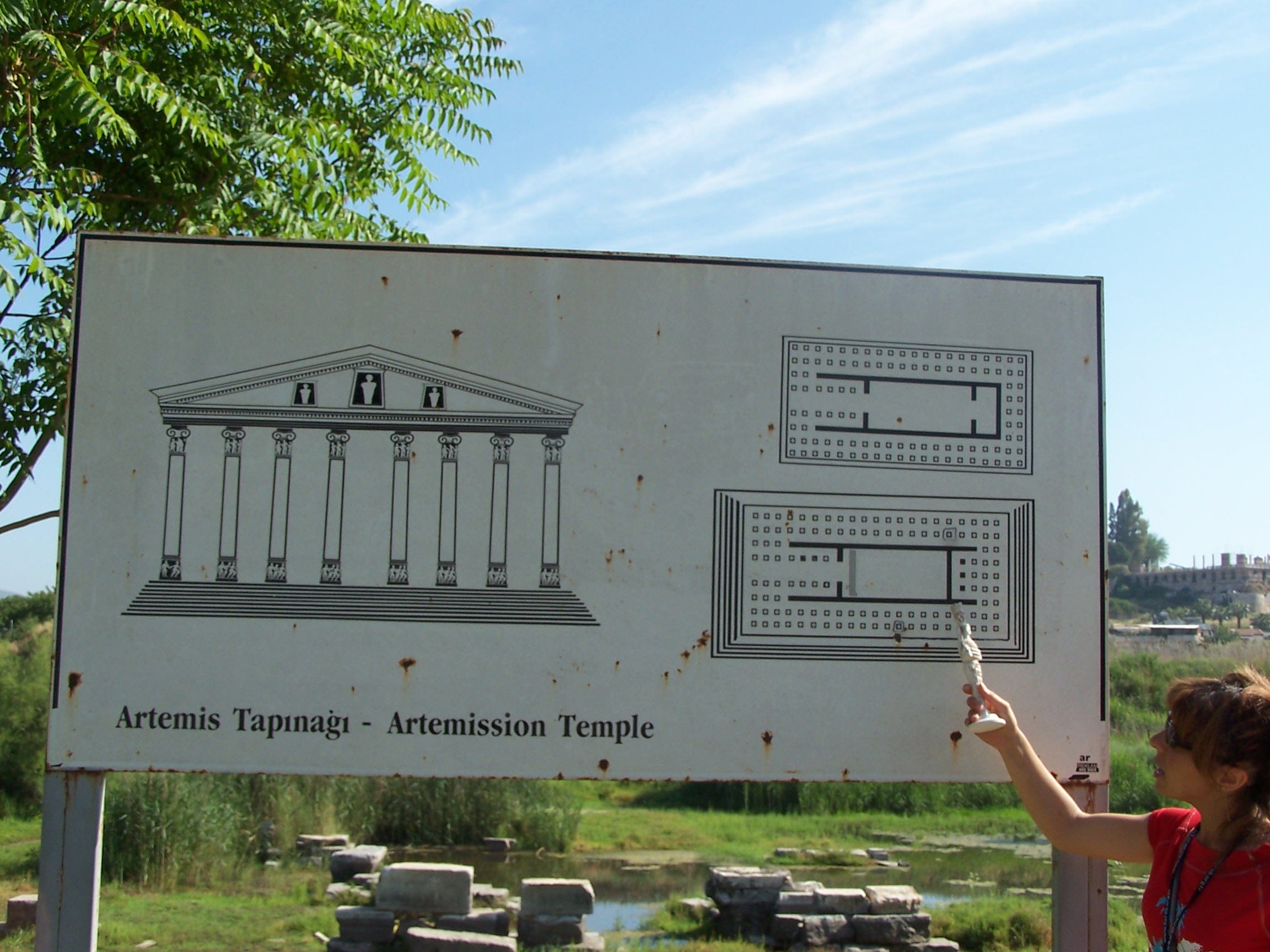
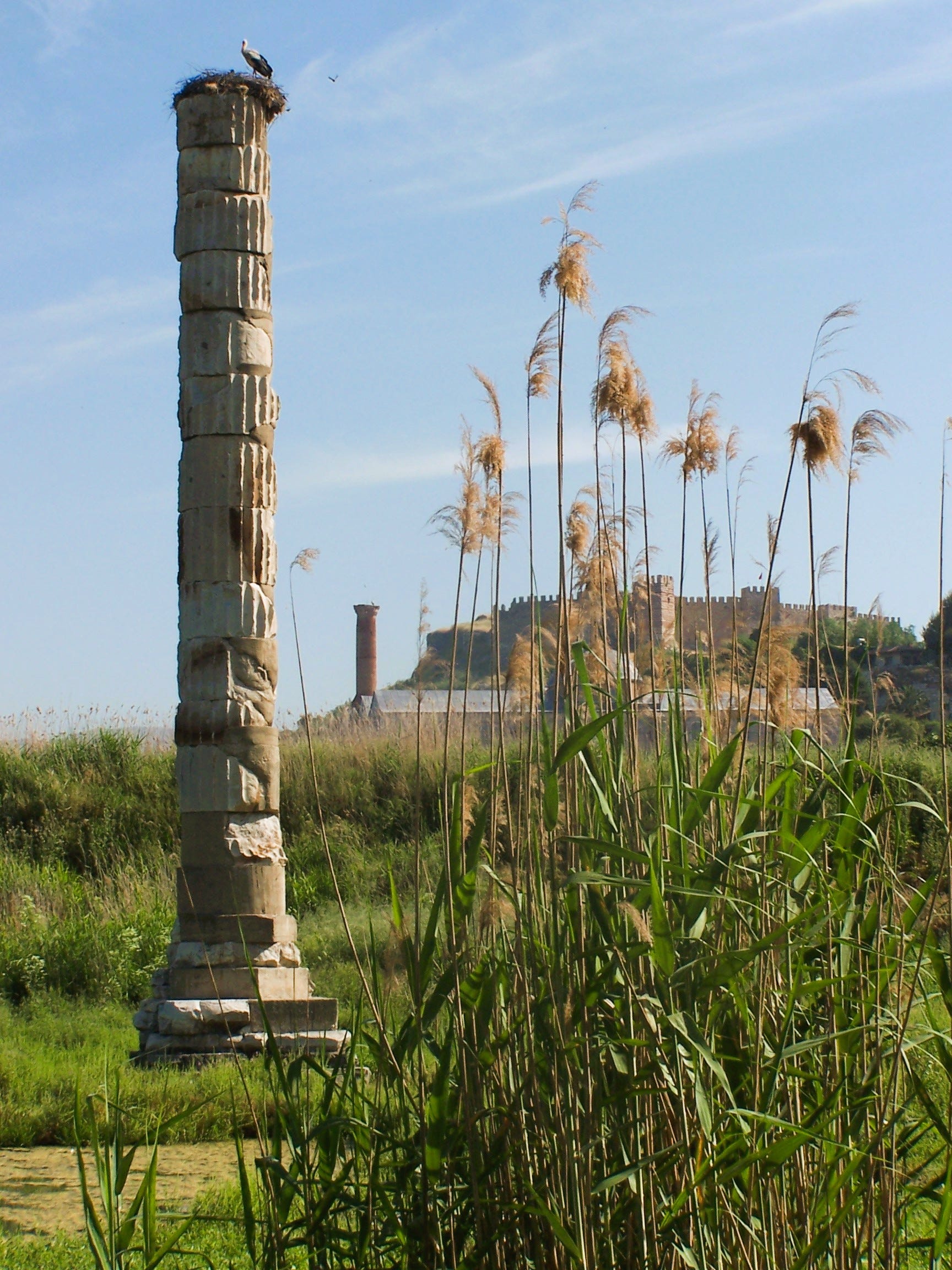
“On this spot,” said our guide, “you see the few remaining stones from one of the seven wonders of the world. It was a giant temple dedicated to the Greek goddess Artemis.” What we were looking at was a single reconstructed column, and at well-placed intervals, a host of other bases and scattered pieces of the hundred magnificent marble columns. Like LEGO. But bigger. So much bigGER. The half-constructed plinth dwarfed us. The solo standing column offered us a sense of the scale of a roofed temple that would have towered over an ancient coastal population in a temple dedicated to the Greek goddess Artemis.


It was this column, this very plinth, that bounced back into my memory when we stood at Paestum in Italy a decade later. How did those previous generations of humans accomplish this? I cannot draw a straight line without a ruler. I am reliant on calculators. How did these craftsmen and engineers get every block to stack so perfectly on the previous one? How did they ensure that each of the one hundred columns was a consistent height so the roof would stay on? Who got to climb to the top? What did they use to lift those stones? It must have been quite the sight to behold!
My mind was racing with logistical and engineering quesitons. But I was in for a much bigger discovery. I had to pull my focus back to our tour guide:
“This valley has attracted worshippers for centuries. Even before the Greeks established Ephesus, people had worshipped on this spot. First there stood a temple to Cybele - a goddess of fertility in the pagan culture of Lydia.” Lydia was an ancient Aegean culture, and Cybele was one of the main deities they worshipped. The culture may have been linked to the Hittites, and Cybele was a version of Mother Earth, of Gaia.
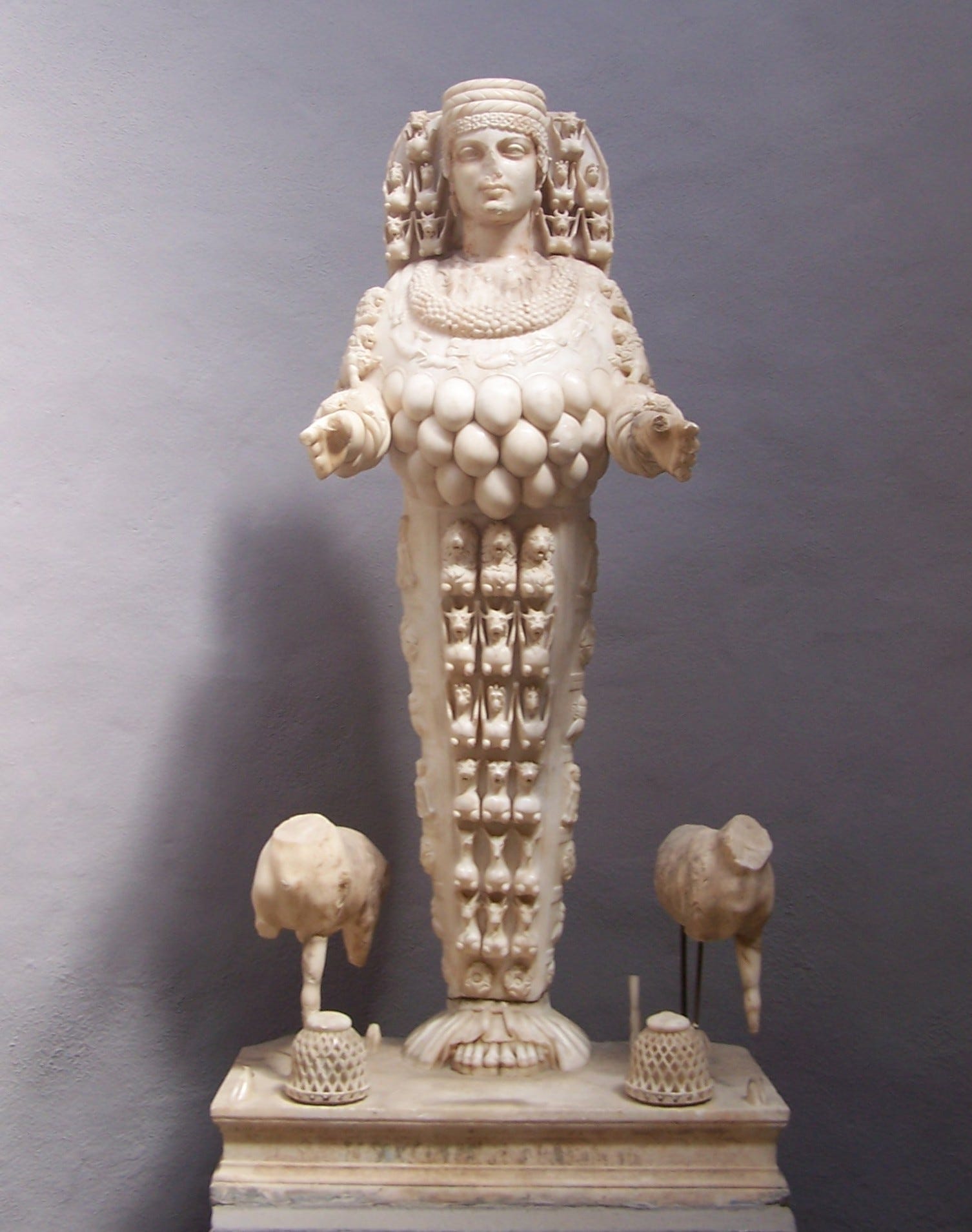
“When the Greeks conquered from across the Aegean Sea, they commandeered this holy spot and constructed the giant temple to Artemis that became one of the wonders of the Ancient world. Then the Romans displaced them and reconstructed the temple to serve their Goddess Diana.”
Then she tapped our daughter on the shoulder, “But as you stand here, look up on the hill.”
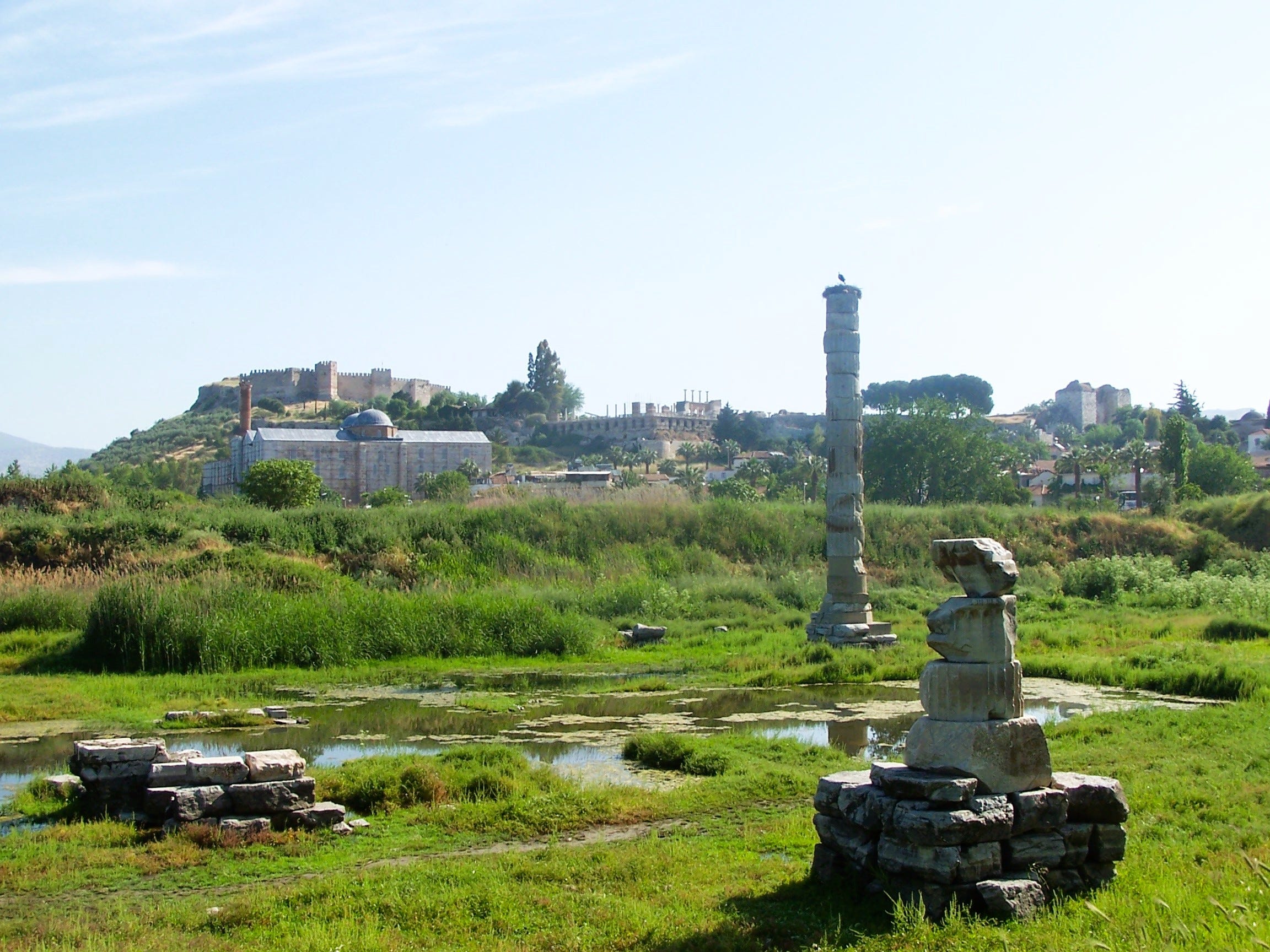
We lifted our chins to see a decent-sized hill around a mile away. On it stood a mosque. “On that spot we find the final home of Our Lady, the House of the Virgin Mary.” I felt my four-year-old tug at my skirt as he whispered, “Is she talking about Jesus’ Mummy?” I nodded, learning a bit of local lore. The guide continued, “After the crucifixion, with Our Lady entrusted to his care by Jesus, St. John left Jerusalem and came to Turkey. A church - a basilica - was built at the site of St. John the Apostle’s grave by Emperor Justinian, who had a great devotion to this saint. The site became one of pilgrimage as Crusaders marched between the Holy Land and their home.”
“But as the religions began to form and coalesce, there was a lot of flux around these major land crossroad sites where Europe meets Asia. At one point, the Basilica was used as a mosque for a young Muslim religion. But the Basilica had to be abandoned when it became structurally unsafe during an earthquake. It was replaced nearby with a newer mosque.”
And so it was. In the space of a single square mile, we had crossed so many centuries, so many civilizations.
Maybe not all civilizations were civil. Some were colonizers who forced their beliefs on another. Here - in this tiny space - was a huddle of most of the world’s major religions. Yanking and co-opting the same locations, encouraging?/coercing? conversions to a new god, goddess or faith.
A fight over “Holy” land - when the world is so wide, why do they fight over the same patch?
There must be a force that calls us to these spots.
And there are a million ways you can learn history sitting in a classroom in one of the newer nations of North America. But this was a very special way to understand and respect just how “old” old really could be.
Ancient Civilizations Panel III
There come some special moments in your life when you realize that history is not something dry. It is the re-telling of a lived experience - HIS-story. When we understand that we are listening to a telling of how real lives were lived – how silly spats and jealousies launched major battles, how disease, earthquakes and famine changed the course of what was to come for generations that came after – well, it takes on a slightly different feeling.
It’s happened a few times for me - huge ahas that arise out of casual conversations with my father or grandmother.
One was when my Dad was all excited to treat all his six kids and some relatives to the cinema. (Expensive endeavour!) We were going to see the latest David Niven & Gregory Peck movie Sea Wolves. I had no problem watching this raucous wartime spy movie, complete with the finale of multiple ships being blown up, because Roger Moore was in the cast. It had been filmed in Goa, and we were told to look out for cameos with some of our relatives who had been drafted in as extras.
“Why did you want us to see this movie in the theatre, Dad?” I asked at the restaurant (McD!) after - this was an “event”! My immigrant, cash-strapped parents would not normally splurge like this, so I was naturally curious. “I remember it. Those bombs went off for two days, and you could hear the noise all the way in Saligao,” he replied. “We watched the fires in the Marmagoa harbour from the hills in our village.”
But, but … this was the Second World War?! It was a ‘historical’ movie, said the little voice in my head, until the lightbulbs started going off in my head. (Dad was born in the 1920s)
HIS-story
Ephesus & Earthquakes
From the letter of St. Paul to the Ephesians.
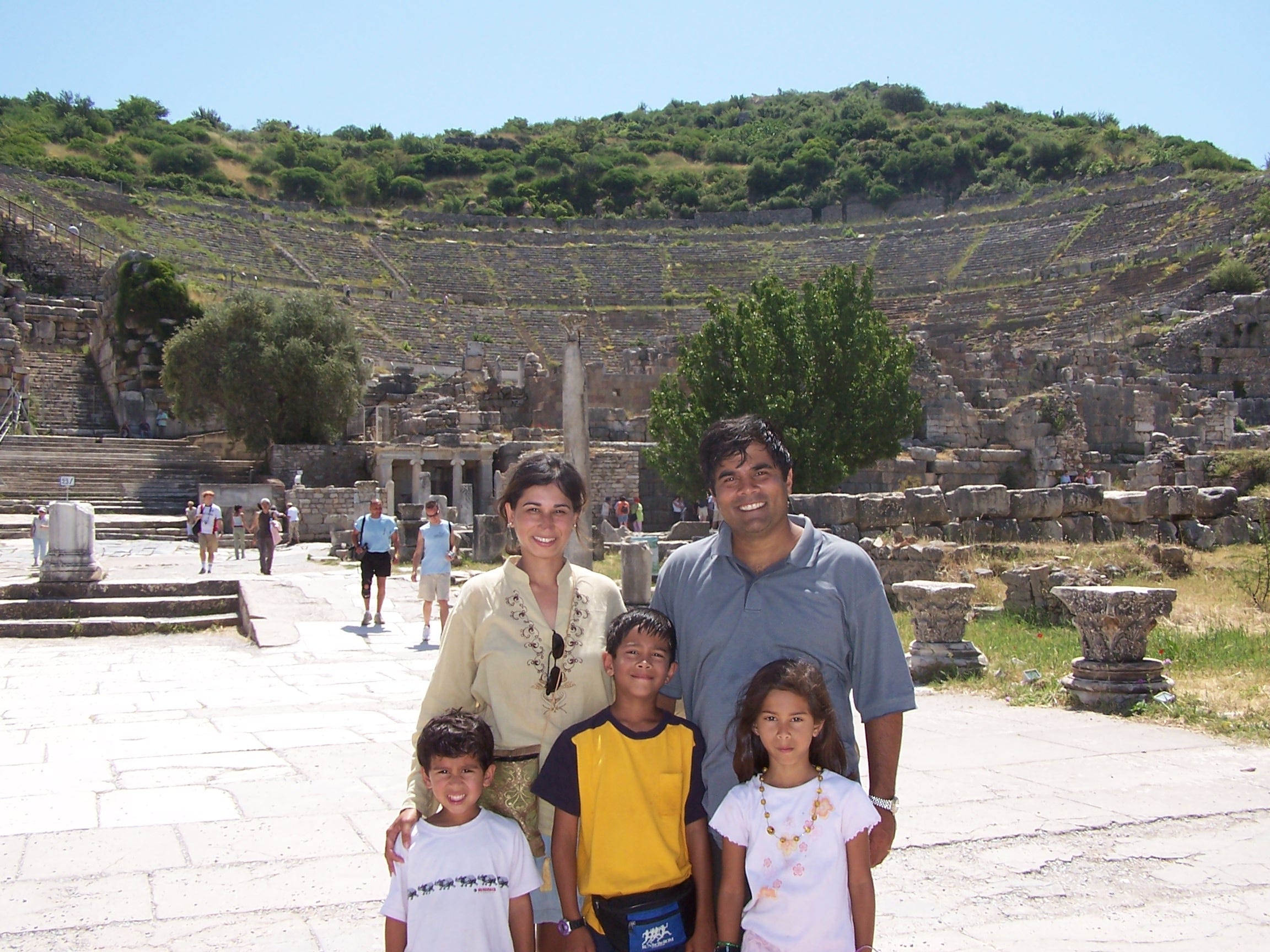
And here I was again. Sitting.
Sitting on the hard, smooth, warm, worn benches that surrounded the amphitheatre in Ephesus, I suddenly felt a different relationship to St. Paul’s letter to the Ephesians. After years and years of sitting on hard wooden benches in various churches on various continents with the same words floating over my head on various Sundays, this suddenly felt real. These were actual words of wisdom, caution and learning sent from one human to a community of others. Real people had sat on these seats, leaning in to listen. Time seemed to telescope.
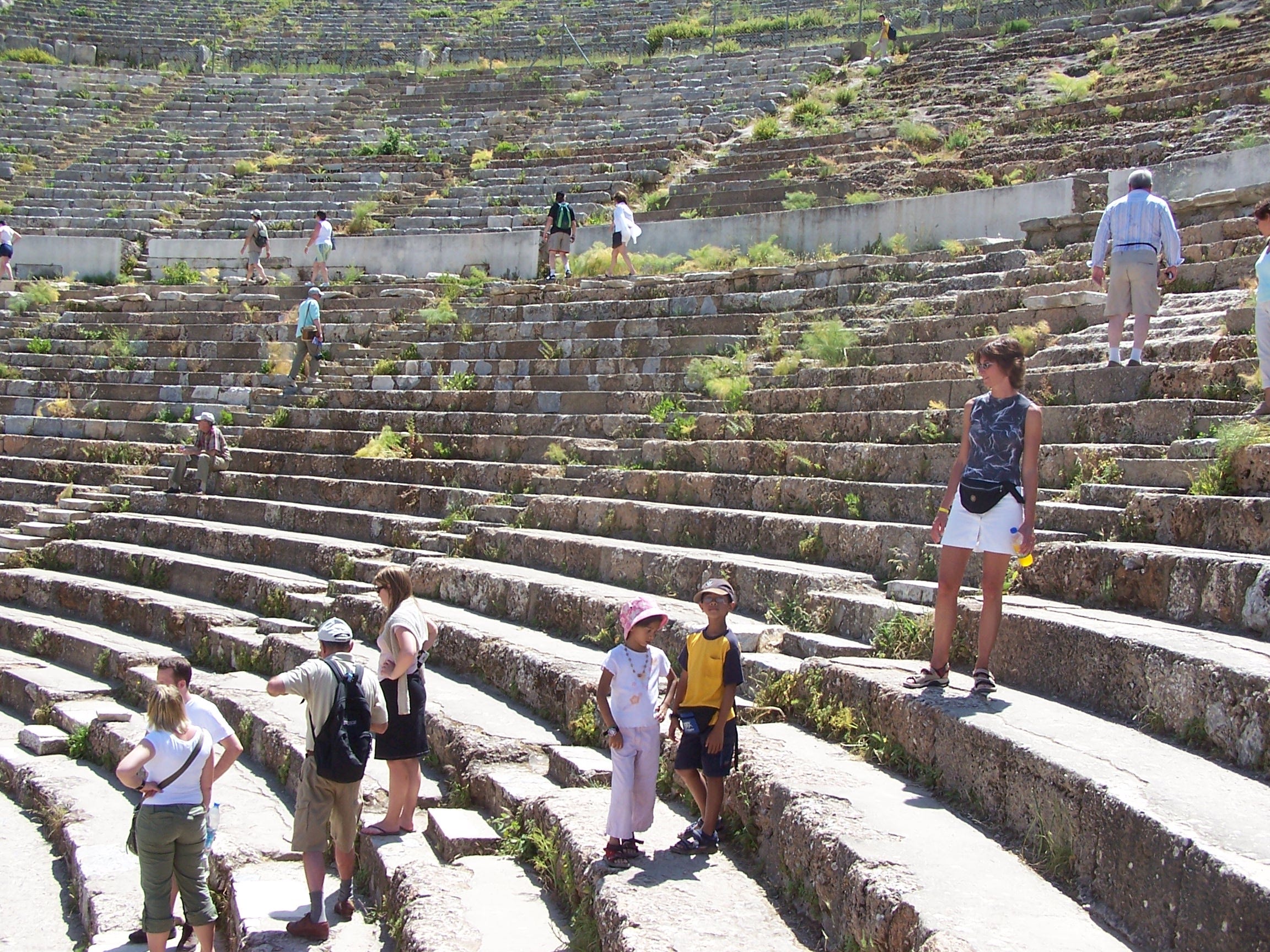
I could not get over the scale. The size. How big was this Ancient city that they had an arena that could seat 25,000?


I imagined friends coming home to discuss St. Paul’s message and its meaning over a meal shared together - just as we might after attending a political rally or an inspiring conference. How they might be thrown into life-altering conversations that would cause them to convert from the religion of their birth. The next time I heard St. Paul’s ‘Letters to the Ephesians’ in church, I felt a compulsion to stand up and say “Hey - I’ve been there!” — much as you would when you are watching a movie and see a familiar landmark that you have visited while on vacation. (No worries. Too much of a church mouse for those antics!)
His-story. Real. No longer dry.
The visit to Ephesus had been the highlight of the many stops on that tour. At this stage of our journey, we had seen many ancient sites including the Pyramids of Giza, the Valley of the Kings, and the Temples of Karnak. But the scale of this felt slightly different.
It was unbearably hot! And it was still only early May! I had my customary damp face cloths that worked as personal air conditioning when used to mop the backs of the kids’ necks. (A veteran travel trick taught to me by my good friend Lynne). It was a battle between keeping them from keeling over and motivating them to engage with history.
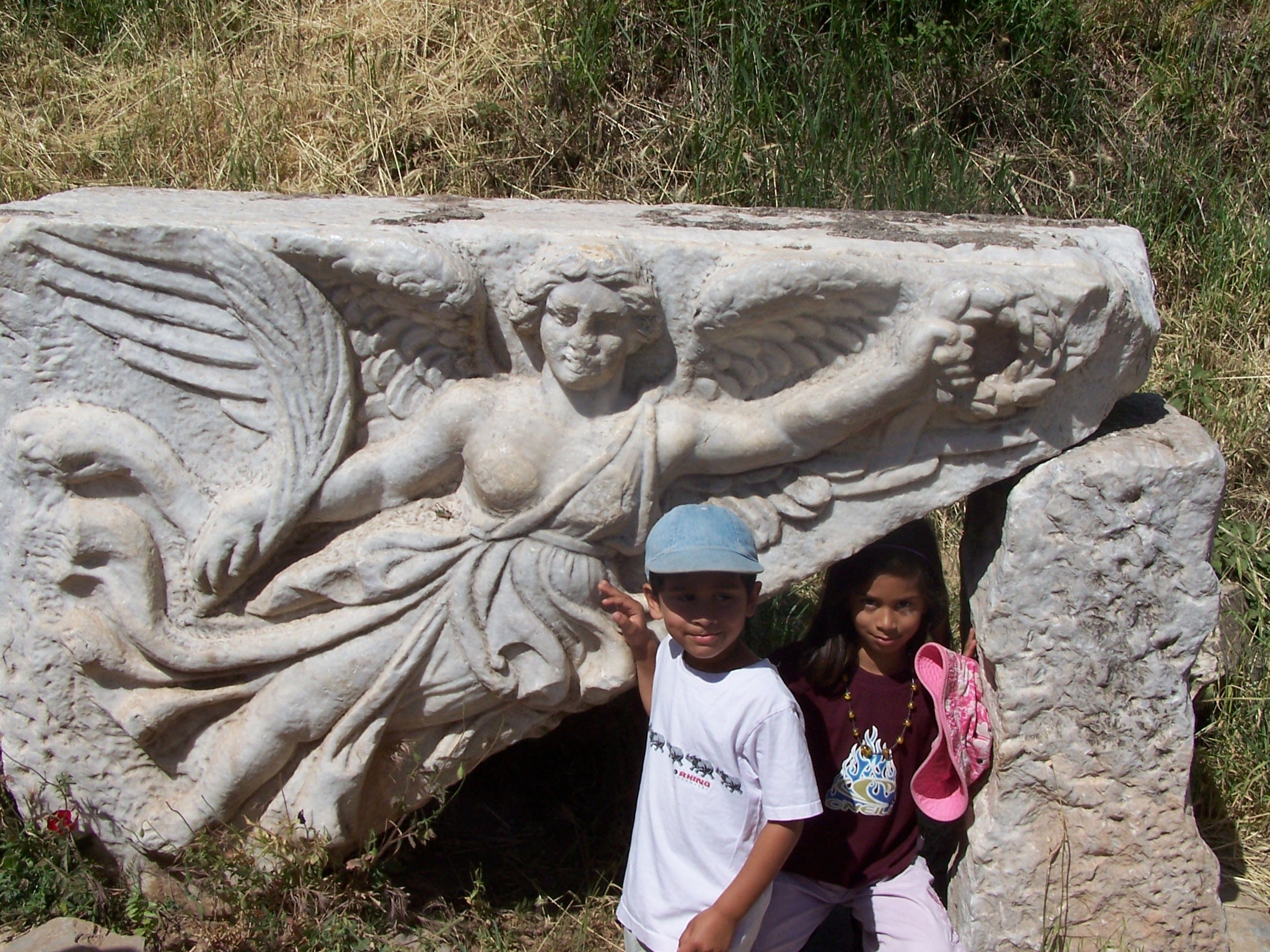
This is when you get the value of a good tour guide! Ours 'read the room’ and got in on the act. She graciously adjusted her tour pitch - normally set for visiting Europeans or the cruise crowd. “I see you have New Balance shoes on,” she said, “but do you know about Nike and their famous Swoosh logo? What is the significance of Nike?”
Our oldest child remains our resident athlete to this day! He knew EVERYTHING about everything. Or so he thought! Stumped. Aha! (And now she had his attention) “Nike is the winged Goddess of Victory in Greek mythology. This carving is part of a temple that stood here. Now, it is said that the swoosh is part of this frieze. Can you find it?” (Clue: check the folds of her dress).
I am sure you can Google Ephesus to see the immense scale of the excavation that has been ongoing for years. It is also famous for the Library of Celsus - a stunning example of Roman architecture.
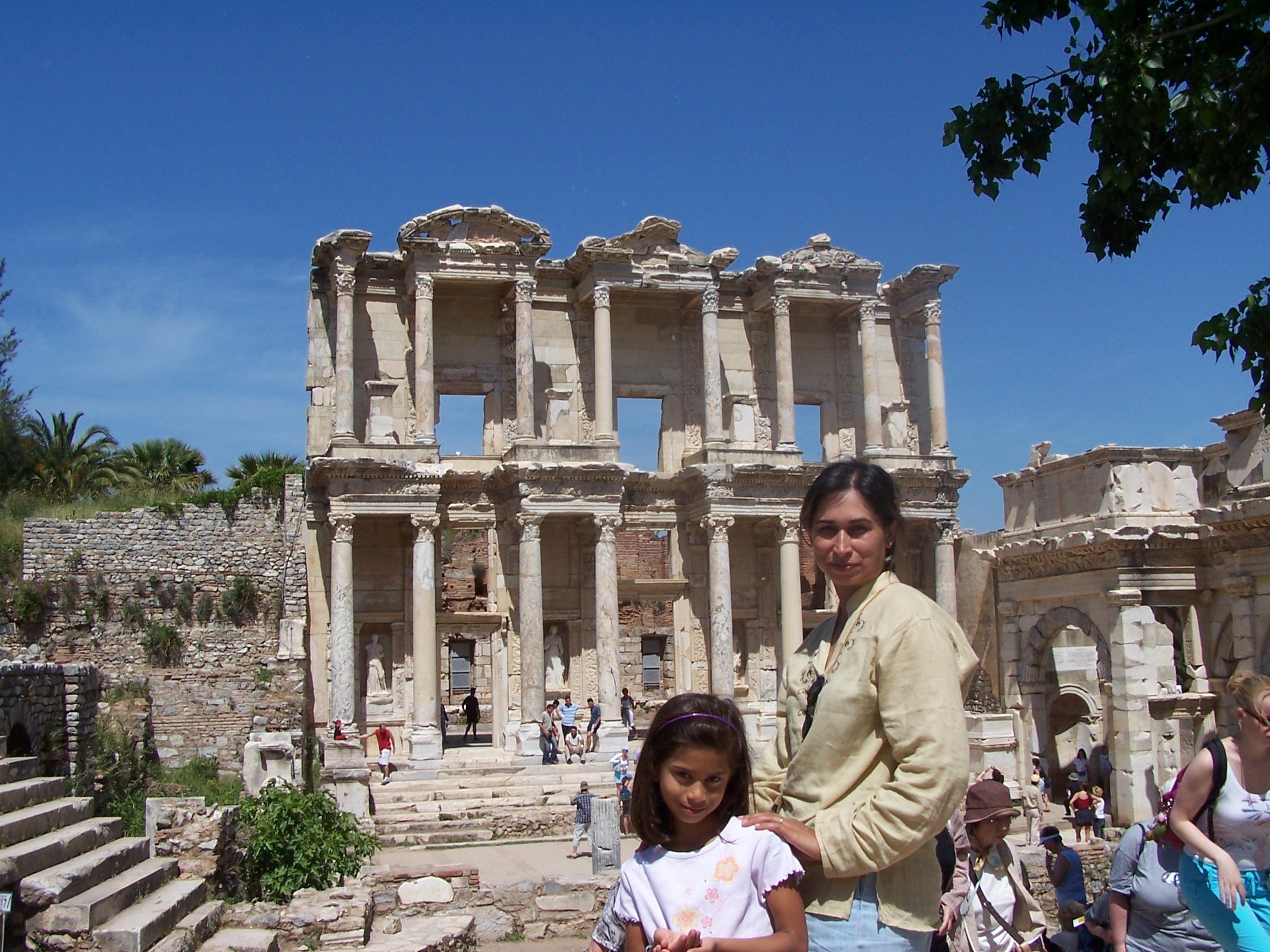
“So Ephesus must have been like a university town - a centre for learning?” I asked our guide, “It makes sense, then, that the disciples came here. There would have been open minds, willing to consider different ideas.”
She took us on a tour of the terrace houses with the mosaic tiles that were being excavated. Years later, we would see very similar structures and designs unearthed from the rubble when we toured Pompeii near Naples.
But that is not what gets a four-year-old to pay attention.
Do you know what does, however? Potty humour.
Our kids found it ever so funny that the entire town used one lavatory! By now, these three were veterans of the various sanitation devices around the world - the hole in the ground in Nepal, weird flush devices in Thailand, watching the water flow anti-clockwise down the toilet bowl down under in Australia (kidding!) and the wonders of the campervan toilet in New Zealand that had to be flushed out before we left camp each morning!
But everyone together? And no running water? What the whatsits? Tons of giggles. And it made for a good rest and photo op:
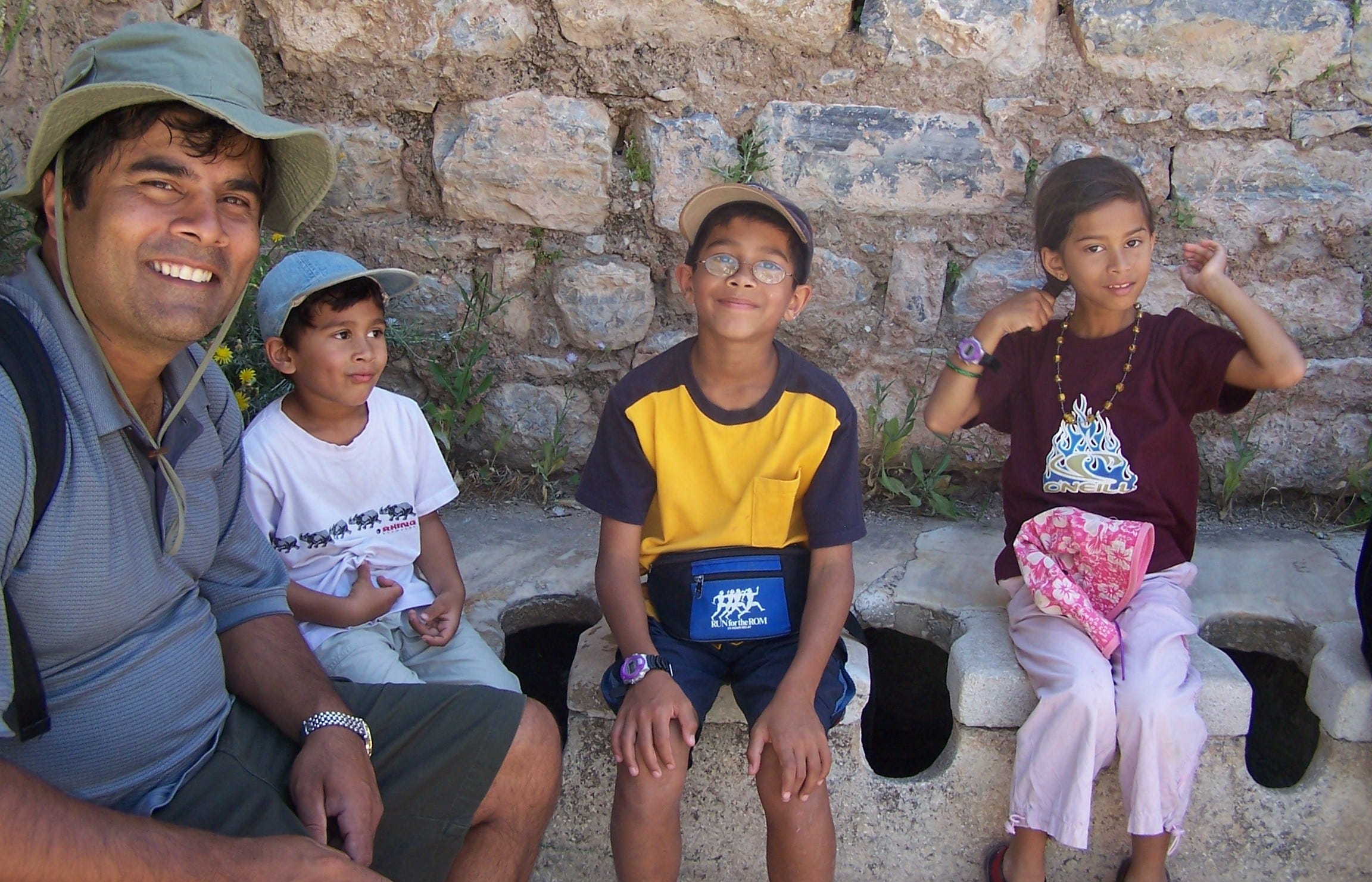
Yes. Those oval-shaped cutouts in the stone were where one did one’s business!
And isn’t it eerie that the shape is so familiar? A design that has stood the test of time.
Ephesus had been HUGE! We had entered the site at the top of the hill and walked through. Now we would exit this archaeological marvel via the broad Main Avenue lined with what remains of many columns. The kids took turns posing as various Greek athletes on the plinths.


How majestic it must have been in its heyday! And to think only 10-20% has been uncovered. “I don’t understand,” I asked, “why is Ephesus not a city still in use like Istanbul?”
“The earliest settlement dates back to 7000 BCE; it became a vibrant port city and one of the earliest Christian strongholds. But it was conquered by the Goths around 260AD. They destroyed the Temple of Artemis and many other structures.”
“Wait. Port city? But we are 20km inland from Kuşadası.” Confused. But now, so much more fell into place and made sense. If it had been a major port, it would explain why there was so much foot traffic through this little patch of land.
“It used to be closer to the coast and had one of the largest ports. But over time - with earthquakes and erosion - the entrance silted up, pushing the coastline out west, till finally there was very little maritime traffic into the city - and without that commerce, the city lost its lifeblood.”
As we walked out, time suddenly had a different feeling.
Full circle.
Earthquakes in Italy at Pompeii. Roman ruins. Cities buried.
Earthquakes in Turkey silting out Ephesus and covering one of the largest cities of its time.
Mother Nature leaving her mark and taking her stand.
And yet, function over form, the shape of a toilet seat has stayed the same, civilization over civilization, even as our technology of shared sponges, leaves, water, toilet paper, bidets and Japanese toilets continues to evolve and become more sanitary.
Tall Grecian columns for a temple built to Artemis, one of the wonders of an ancient world.
Tall Grecian columns in a Greek colony in Italy, in a quiet spot called Paestum.
Civilizations that thought they had it all figured out and would last forever.
Now ancient. Lying in ruins.
Is there a lesson in there for the rest of us?
Maybe that is why we are called to study his-story.
.
.
.
“But. What about the burrata?”
“Did you know,” asked my foodie brother-in-law, “that burrata has its roots in this vicinity?” Talk about holding my children hostage. “If you are good and let your Dad have his 3-hour detour to Paestum, we will reward you with the freshest burrata you have ever tasted.”
There is a region called the Mozzarella Route, a short drive from where the Amalfi coast hits the Italian mainland. And in that little elbow of space, lie a few dozen world-renowned buffalo mozzarella dairy farms.
We stopped off. The cheese was so fresh, it was still warm. We picked the 4x4 inch bags from the counter, each with its tiny ball of deliciousness. “Watch out for that first burst of flavour,” my brother-in-law cautioned. “Don’t bite down. Just nip the skin of the burratina, and then wait a few seconds.”
I watched my daughter’s eyebrows rise as the stream of deliciousness flooded the roof of her mouth with an indescribable experience. “Try one, Mum!” When that bag of creamy curd and salty whey hit my palate - there is nothing that can quite describe it!
A few years later, we were lucky to gather again in London when my niece from Hong Kong got her A-level results and found out that she had the necessary marks to enter LSE. We went out to celebrate in Covent Garden, steps from her soon-to-be home.
On the menu? Burrata.
Burrata - that brought back memories of time spent with cousins at other family meetups.
Burrata - a soft, salty, creamy visceral memory. A proxy, that reminded us that civilizations may come and go, but some things - like family gatherings and supporting our own circle of friends and family through transitions - stays the same.
Burrata - that reminded us we don’t have to build in stone. Like the people of Selçuk, we can reinvent, rename and redefine our basic experiences.
At the end of the meal, a server approached our table with a very confused look on his face. Among the orders for chocolate cake, ice cream and toffee pudding was a plate of the burrata salad appetizer, hold the lettuce. “Wrong table - this must be a mistake,” he said apologetically as he turned to leave. “Oh no, you don’t!” replied my daughter emphatically, stopping him. “That is mine! It’s better than ice cream!”
Burrata for dessert has been our family tradition ever since.

Inspiration:
🥳 Edition 250 of Tilt the Future demanded a little celebration! 🎂🎂
It also coincides with the USA’s celebration of the 250th anniversary of the signing of the Declaration of Independence - the birth of a significant era.
Serendipity. I’d planned a post that connected those two dots.
Then my muse stepped in with this travel writing challenge from Kat
and I decided instead to rhyme and riff off the number 250 with these stories about civilizations that existed 2,500 years ago.
For Brandon, who is in search of a family-friendly misogi.
Dedicated to my Mother and Grandpa Ted.
Your turn “}…{`
What do you think is the hinge connecting these stories?
What would you like to hear about next?
Thank you for being part of our tribe and for reading along. If you have been here from the start … with the first of 250 editions published on September 15, 2021, a HUGE thank you for the steady messages of “I’ll be watching!” support and encouragement through your emails, phone calls, and DMs. I would not have gotten here without you.
Stay healthy. From there, all else becomes possible. And remember, the best idea can come from anyone, anywhere, at any time!
And I’ll see you again next week

© on all photos Karena de Souza
‘Ancient Civilizations’ was one of the three core curricula that framed our year of travel 2004-2005 with our three young children then aged four, six and eight. ‘Friends and Family’ and ‘Nature and ecosystems under threat’ were the other two. These three themes, braided together, helped us intentionally design the stops on our 16-country family gap year.
Contours of Courageous Parenting, available on Amazon, contains a few stories from this journey. You can find excerpts from that book, and secret chapters from the next scattered through my newsletter with the tags #travel or #contour
Learn more about the Temple of Artemis https://en.wikipedia.org/wiki/Temple_of_Artemis
You had me at triptych! (No, seriously, my brain immediately recalled what I'd learned in "Medieval Art History" way back in college.)
Have you been to Delos? I experienced similar awe at the scope of human experience standing among the many temples of that island.
Oh my gosh and what a remarkable post and feat this is. You inspire me Karena. Congrats on Issue No. 250!! 🔥🎉